
Jewish Heritage & Sahara Morocco Tour: Can You Combine Both?
Yes. A Jewish heritage journey and a Sahara Desert experience can be combined into one thoughtfully planned Morocco itinerary. The two don't compete for the same days so much as they sit at opposite ends of the same route — heritage travel is concentrated in a handful of historic cities, while the Sahara sits further south, reached through the Atlas Mountains and the Draa Valley. The part that actually matters is routing and pacing: which cities come first, how many nights each one gets, and whether the drive south to the dunes is built in gradually or rushed as an afterthought.
This guide is for travelers exploring Moroccan Jewish history, families reconnecting with Moroccan roots, and anyone weighing a private or tailor-made trip that includes both. It only discusses destinations and experiences Morocco Meander can actually arrange, and it's honest about where a shorter trip means compromise rather than pretending everything fits into any number of days.
Quick Answer
Yes — heritage and the Sahara combine well on a private itinerary of 10 days or more. A well-built route typically threads Marrakech's Mellah and Jewish cemetery, a heritage stop such as Fes or Essaouira, the Draa Valley, and a Sahara camp (commonly Erg Chigaga) into one line rather than a series of separate side trips.
Seven days is possible but selective — expect to choose one or two heritage stops rather than several. Fourteen days allows a genuinely unhurried pace, with time for both cultural depth and the desert without long back-to-back driving days. See our Morocco Jewish Heritage Tours hub for the full range of routes.
Can You Combine Jewish Heritage and the Sahara in One Trip?
Yes — and Morocco's geography is actually what makes it possible. The country's Jewish heritage sites are concentrated in a cluster of historic cities across the north and center: Marrakech, Fes, Essaouira, and Casablanca each hold different pieces of a centuries-long Jewish presence in Morocco, from mellahs (historic Jewish quarters) to synagogues and cemeteries. The Sahara, meanwhile, is reached by heading south from Marrakech, through the High Atlas and the Draa Valley, toward dune fields such as Erg Chigaga or Merzouga.
Because those two dimensions of the country sit in different directions rather than directly along the same road, the trip works best as one continuous private route rather than two separate excursions bolted together. A private driver-guide can start in the heritage cities, move south with planned stops rather than a single long haul, and end in or near the desert — or the other way around, depending on your flight in and out.
The one thing that reliably makes this kind of trip feel rushed is trying to fit too many cities into too few days. 11 Days Morocco Jewish Heritage Tour that tries to cover Marrakech, Fes, Essaouira, and the Sahara will spend more time in transit than in any single place. The itinerary examples below show what changes as you add days.
Why Combine Jewish Heritage With the Sahara?
These are two very different dimensions of the same country, and that's exactly what makes the combination work — each one gives the trip something the other doesn't.
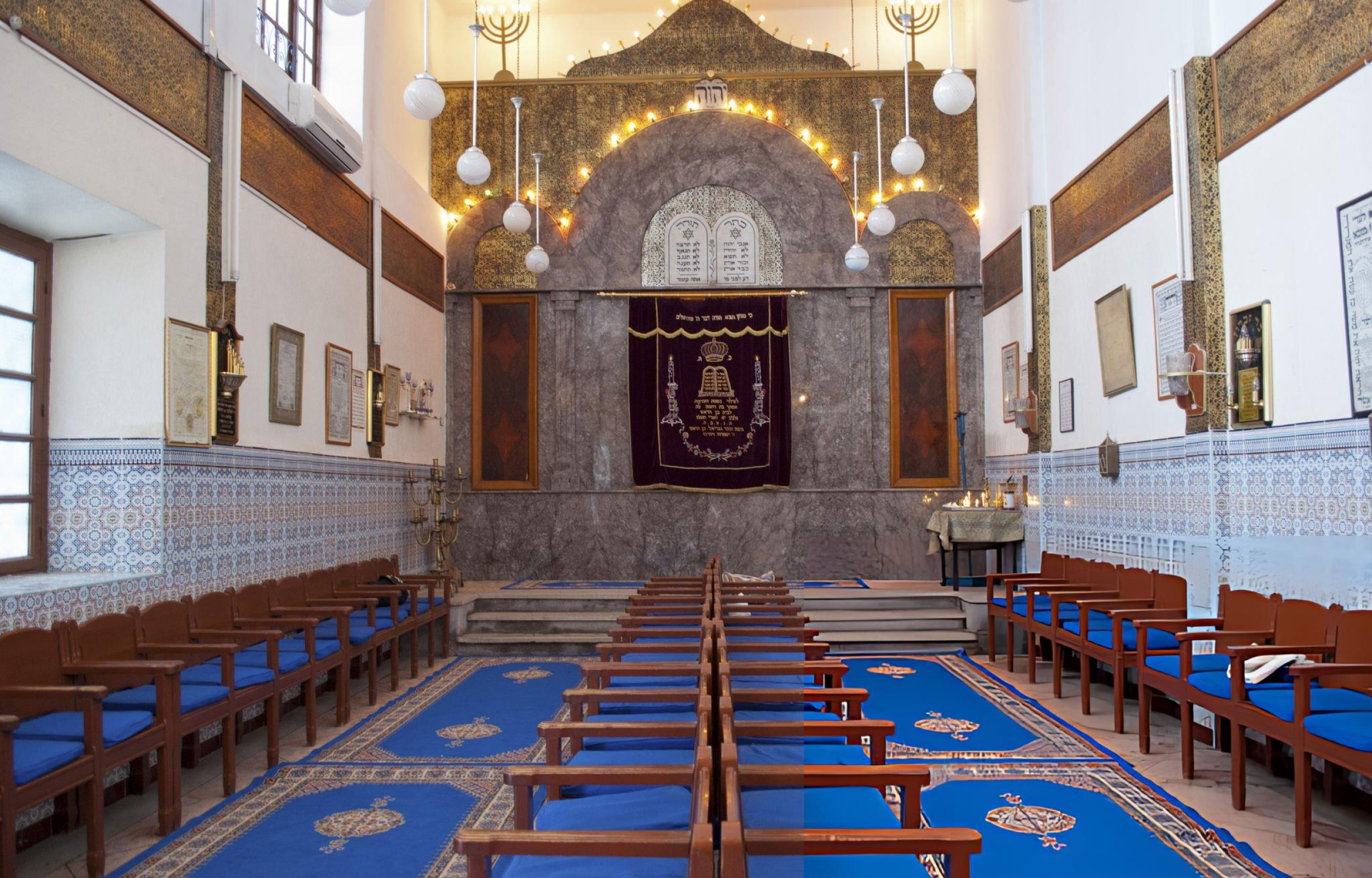
The heritage side brings history that's specific and personal: the mellahs where Jewish communities lived for centuries, cemeteries that are still maintained today, synagogues that are still standing, and, for some travelers, a direct connection to a family surname, a hometown, or a story passed down for a generation or two. It's travel with a thread of meaning running through it, not just sightseeing.
The Sahara side is almost the opposite register: open landscape, dunes that shift and change color through the day, a desert camp for the night, and a stillness that's hard to find anywhere else in Morocco. Stargazing, a quiet sunset over the dunes, and — where you'd like it — a camel ride are part of the experience, though none of that requires a multi-day trek unless you want one.
Put together, the trip has both depth and space: cultural weight in the cities, and room to breathe once you're in the desert. Neither one has to be cut short to make room for the other, provided the itinerary gives each enough time.
What Could a Jewish Heritage & Sahara Itinerary Look Like?
The following are examples, not fixed packages. The right routing for you depends on which cities matter most, how many days you have, and where you fly in and out of.
7-Day Example
A shorter trip, and realistically the one where some compromise is needed.
- Arrive Marrakech — Mellah, Jewish cemetery, and old Jewish quarter
- Ait Ben Haddou and the road south through the High Atlas
- Draa Valley — palm groves and kasbahs en route to the desert
- One night in the Sahara (commonly Erg Chigaga)
- Return to Marrakech and departure
Seven days generally means choosing Marrakech as the heritage focus rather than adding Fes or Essaouira as well — there simply isn't enough time to do both without long driving days.
10-Day Example
A noticeably more comfortable balance.
- Marrakech — heritage sites plus city time
- Essaouira or Fes — a second heritage destination, chosen based on your priorities
- Draa Valley, with an overnight stop rather than a single long push
- Sahara (one to two nights)
- Return via Marrakech
Ten days is usually enough to add one further heritage city without the trip feeling like it's constantly on the move.
14-Day Example
The option for travelers who want real depth and a slower pace throughout.
- Marrakech and Fes — both explored properly, not as a single overnight stop each
- Additional heritage sites, with Essaouira or Casablanca added where relevant
- Time in the Atlas Mountains
- Draa Valley, broken into shorter driving segments
- Sahara, with two nights to allow both sunset and sunrise in the dunes
- Room for one or two open days, rather than a schedule with no slack
Fourteen days is where the trip stops feeling like a checklist and starts feeling like a journey — heritage, culture, and the Sahara each get proper time rather than a rushed afternoon.
Which Jewish Heritage Sites Can Be Combined With a Sahara Journey?
Morocco's Jewish heritage sites aren't spread evenly across the country — they're concentrated in a small number of cities, each with a different character. Here's how the main ones tend to fit into a broader itinerary.
Marrakech. The Mellah, one of Morocco's oldest Jewish quarters, along with the Miâara Jewish cemetery, sit within the city's medina — making Marrakech the easiest heritage stop to combine with a Sahara route, since it's also the natural starting point for the drive south.
Fes. Home to the oldest mellah in Morocco, established in the 15th century, with synagogues and a Jewish cemetery still part of the old city today. Fes sits further north than Marrakech, so it adds meaningfully to driving time and works best on a 10-day itinerary or longer.
Essaouira. A coastal city with a documented Jewish history and the Bayt Dakira heritage center, which preserves the story of the city's Jewish community. Essaouira pairs naturally with Marrakech as a coastal add-on before heading south to the desert.
Casablanca. Home to the Museum of Moroccan Judaism, the only Jewish museum in the Arab world. Casablanca is usually a starting or ending point for international flights, which makes it a natural bookend to the itinerary rather than a mid-trip detour.
Access to specific synagogues, cemeteries, or archives can require advance arrangement, and some sites keep limited visiting hours. If a particular site or family connection matters to your trip, it's worth flagging that early so it can be built into the itinerary rather than confirmed at the last minute.
What Is the Best Length for a Jewish Heritage & Sahara Morocco Tour?
7 days. Possible, but more selective — plan on one heritage city plus the Sahara, not several heritage stops.
11 Days Morocco Jewish Heritage Tour A genuinely good balance: enough time for two heritage destinations, a properly paced drive south, and one or two nights in the desert.
14 days. Better suited to travelers who want a deeper, more relaxed experience — additional heritage cities, more time in each place, and no need to compress the Draa Valley crossing into a single long day.
The goal isn't to fit Morocco into your schedule. It's to design Morocco around the experiences that matter most to you.
Why Private Travel Makes This Combination Easier
Combining heritage sites in one part of the country with the Sahara in another is exactly the kind of trip that benefits from private rather than fixed-departure travel. A private itinerary allows:
- Flexible timing at heritage sites, rather than a bus schedule dictating how long you get at a cemetery or synagogue
- Private transportation for the whole trip, with the same driver-guide throughout
- A route built around your priorities, not a template designed for the average visitor
- More time where it matters and fewer stops where it doesn't
- Accommodation chosen for comfort and location, not just availability
- Adjustments for family members with different energy levels or interests
None of this requires an elaborate production — it mostly comes down to having a single point of contact who plans the route around you rather than fitting you into someone else's fixed schedule. That's the basis of how Morocco Meander builds a private Morocco tour: one driver-guide, one itinerary, adjusted around your dates, pace, and priorities.
Plan Your Jewish Heritage & Sahara Journey
Combine the places that matter to your family's story with the landscapes and experiences you've always wanted to discover in Morocco.
Request a Private ItineraryCan You Combine Jewish Heritage, Luxury Travel & the Sahara?
Yes, and the two are naturally compatible rather than in tension. What makes this kind of trip feel premium isn't a long list of extras — it's the absence of friction: a boutique riad instead of a standard hotel, a private car instead of shared transport, an ensuite desert tent instead of a shared one, and a guide who has time to actually explain a site rather than rush the group to the next stop.
For travelers who want that level of comfort throughout, our luxury Morocco vacation routes and luxury Sahara desert camps can be built into the same itinerary as the heritage stops — the two aren't separate products, just one route designed with a higher level of comfort in mind.
Jewish Heritage & Sahara for Families
This combination tends to work particularly well for families, including multi-generational groups traveling together. A private itinerary allows:
- Shared family time at heritage sites that mean something specific to your family's story
- A pace that suits both older and younger travelers, rather than one fixed speed for everyone
- Private transportation, so nobody is waiting on a group schedule
- A natural mix of cultural depth (heritage sites, museums, mellahs) and outdoor experience (the desert, camel rides, the Atlas Mountains)
- Time built in for the family itself — a shared meal, an evening in the desert, a quiet afternoon rather than constant movement
Plan a Private Family Heritage Journey
What About Jewish Ancestry Travel?
For some travelers, this trip isn't just about history in general — it's about a specific thread: a family hometown, a surname, a former Jewish quarter, a synagogue with a family connection, or a cemetery visit tied to a story passed down through generations.
Your family's story doesn't have to be the whole trip. It can be the thread that connects the journey.
An ancestry-focused stop can be built into a broader itinerary alongside the Sahara and other heritage sites, rather than standing alone as a separate trip. If you have a specific town, surname, or site in mind, sharing that early in the planning process — rather than once you've already arrived — makes it far easier to build advance arrangements around it where they're needed.
Not Sure How to Fit It All Together?
Tell us how many days you have, which heritage sites or family connections matter to you, and whether you'd like to include the Sahara. We'll help shape the journey around your priorities.
Design My Morocco JourneySample Routes
| Trip length | Possible focus | Best for |
|---|---|---|
| 7 days | Selected heritage + Sahara | First-time visitors with limited time |
| 10 days | Heritage + cities + Sahara | Couples and families |
| 14 days | Deeper heritage + Sahara + slower travel | Travelers seeking a more immersive journey |
| Custom | Built around family history | Ancestry & bespoke travel |
These are examples, not fixed packages — every route above can be shortened, extended, or rearranged around your dates and priorities.
When Is the Best Time to Combine Jewish Heritage & Sahara?
Spring (March–May) and autumn (September–November) tend to offer the most comfortable conditions for both city walking and desert nights — mild days across most of the country, without the extreme summer heat in the south.
Summer brings Sahara daytime temperatures that can exceed 40°C, which is worth planning around regardless of the rest of the itinerary; early morning or late afternoon activity in the desert works better than midday.
Winter is generally pleasant in the south and in the heritage cities, but desert nights get cold, and higher mountain passes can see occasional snow, which can affect driving times through the Atlas.
Weather patterns shift year to year, so treat this as general guidance rather than a guarantee, and confirm seasonal conditions closer to your travel dates.
Is a Jewish Heritage & Sahara Morocco Tour Right for You?
It may be ideal if you want:
- Jewish heritage and Moroccan Jewish history
- Family history or ancestry exploration
- Broader Moroccan culture alongside the heritage sites
- Private, flexible travel rather than a fixed group schedule
- Desert landscapes and a night under the stars
- A varied itinerary rather than a single-theme trip
- A meaningful journey, not just a checklist of stops
Consider a slower itinerary (10–14 days) if:
- You're traveling with older family members
- You want to explore ancestry in real depth, not just visit one site
- You'd prefer boutique or higher-comfort accommodations throughout
- Long driving days aren't something you enjoy
- You want more than a rushed afternoon in each destination
Being honest about pacing here matters more than selling the same itinerary to everyone — a 7-day trip and a 14-day trip serve genuinely different travelers, not just different budgets.
Why Plan This as a Private Morocco Journey?
The strongest case for planning this as one private itinerary, rather than booking a heritage tour and a separate Sahara trip, is coherence. Heritage, culture, the Sahara, and comfort don't have to be four separate decisions — they can be one route, built around what actually matters to you, with a single driver-guide who understands the whole plan rather than picking you up partway through it.
That's the difference between fitting Morocco into a template and building the trip around your own story.
Frequently Asked Questions
Can I combine a Jewish heritage tour with the Sahara in Morocco?
Yes. Morocco's Jewish heritage sites are concentrated in cities like Marrakech, Fes, Essaouira, and Casablanca, while the Sahara sits further south. A private itinerary can connect both into one continuous route rather than two separate trips.
How many days do I need for a Jewish heritage and Sahara tour?
Ten days offers a comfortable balance between heritage stops and the desert. Seven days is possible but more selective, while 14 days allows a slower, deeper pace with time for additional heritage cities.
What cities are best for Jewish heritage in Morocco?
Marrakech, Fes, Essaouira, and Casablanca each hold different pieces of Moroccan Jewish history, from mellahs and synagogues to cemeteries and the Museum of Moroccan Judaism in Casablanca. Which cities fit best depends on your route and available time.
Can I visit Jewish heritage sites and the Sahara on a 10-day trip?
Yes. A typical 10-day route includes Marrakech, a second heritage city such as Essaouira or Fes, the Draa Valley, and one to two nights in the Sahara, without excessive driving in any single day.
Can I include my family's Moroccan hometown in the itinerary?
Often, yes, though it depends on the location and what kind of access is possible. Sharing the town, surname, or site early in planning allows time to arrange any advance access needed.
Is a private tour better for Jewish heritage travel?
For most travelers, yes. Private travel allows flexible time at heritage sites, a route built around your specific priorities, and a consistent driver-guide throughout, rather than a fixed group schedule.
Can Jewish heritage travel be combined with a luxury Morocco vacation?
Yes. Boutique riads, private transportation, and ensuite desert camps can be built into the same itinerary as heritage sites — comfort and heritage travel aren't separate categories.
Can families combine Jewish heritage and the Sahara?
Yes, and this combination often works particularly well for multi-generational groups, since a private itinerary can balance cultural depth with outdoor time at a pace that suits everyone traveling.
What is the best time of year for a Jewish heritage and Sahara tour?
Spring and autumn generally offer the most comfortable conditions for both city walking and desert nights. Summer brings intense Sahara heat, and winter brings cold desert nights, so both are worth planning around.
Can I visit Jewish cemeteries and synagogues during the trip?
Many are open to visitors, though some require advance arrangement or have limited hours. It's best to confirm specific sites during planning rather than assuming access on arrival.
Plan Your Trip
- Morocco Jewish Heritage Tours
- Luxury Sahara Desert Tours
- Camel Trekking & Sahara Desert Tours
- Luxury Morocco Vacation Packages
- 11 Days Morocco Jewish Heritage Tour
- Fes Tours
- Essaouira
- Casablanca Tours
- Build a Tailor-Made Morocco Tour
Ready to Combine Jewish Heritage & the Sahara?
A Jewish heritage journey can be deeply personal, while the Sahara adds an entirely different dimension to the experience. With a private itinerary, the two can become one coherent Morocco journey rather than two separate trips. Tell Morocco Meander what you want to discover, how long you have, and who you're traveling with.
Request My Private Jewish Heritage Itinerary Explore Jewish Heritage Tours