
Private & Guided · For Birders
Morocco Birding Tours: Birds of the Sahara to the Atlas
From flamingo-lined wetlands to Morocco’s endemic birds high in the Atlas, private tours built around your target species and pace.
Quick Answer
Morocco Meander’s birding tours are private trips led by a team of local bird guides. Ismail and Mustapha organize each one. Toyota Land Cruiser 4x4 transport reaches Souss-Massa, the High Atlas, Sahara oases, and coastal wetlands. Spring and autumn bring the richest birding, when migration through the Strait of Gibraltar peaks. Itineraries are tailor-made around your target species, from Morocco’s endemic birds to wintering waterfowl.
Why Birders Choose Morocco
A life list, not just a holiday
A good birding trip has a rhythm most travelers never notice. Up before dawn for the chorus. Then a long quiet wait at a hide. Then the sudden thrill of a lifer stepping into view. That rhythm is what we build every itinerary around.
Morocco rewards that patience more than most countries its size. Within a single trip, you can move from wetland flamingos to Morocco’s endemic birds in cedar forest. From there, it’s a short drive down into desert birds of the Sahara, adapted to heat and sand. Few countries pack that range into drives measured in hours, not days.
Guides here don’t just spot birds. They know call notes and breeding behavior. They also know the quiet approach a hide demands, so the birds stay long enough to actually watch.
National Parks For Birding In Morocco
Best birding hotspots in Morocco
Six places worth building an itinerary around. Each one has its own specialty.
Souss-Massa National Park
Home to the critically endangered Northern Bald Ibis, plus waders and warblers along the Oued Massa estuary.
High Atlas Mountains
Cedar and juniper forest holding the Levaillant’s Woodpecker, Atlas Stonechat, and high-altitude raptors.
Tazekka National Park
Middle Atlas cedar forest near Taza, good for woodpeckers, raptors, and forest songbirds away from the crowds.
Sahara Desert Oases
Desert Lark, Hoopoe Lark, and other true desert specialists, found around palmeries south of the Atlas.
Essaouira Coastal Wetlands
Flamingos, herons, and egrets along the Atlantic coast, with strong movement during spring and autumn passage.
Strait of Gibraltar
Morocco’s northern coast offers front-row views of one of the world’s great raptor migration bottlenecks.
Morocco’s Endemic Birds
Species you won’t find anywhere else
A short list of the birds that draw dedicated birders to Morocco specifically, not just North Africa in general.
This small, well-camouflaged owl favors Atlas foothill woodland, most often located by call at dusk.
Found only at High Atlas elevation, perching openly on scrub, distinct from its lowland relatives.
Found in Atlas cedar and oak forest, a North African relative of the Great Spotted Woodpecker.
A true Sahara specialist, colored to match the stone and sand it nests among.
Known for its dramatic display flight, dropping through the air while singing over open desert.
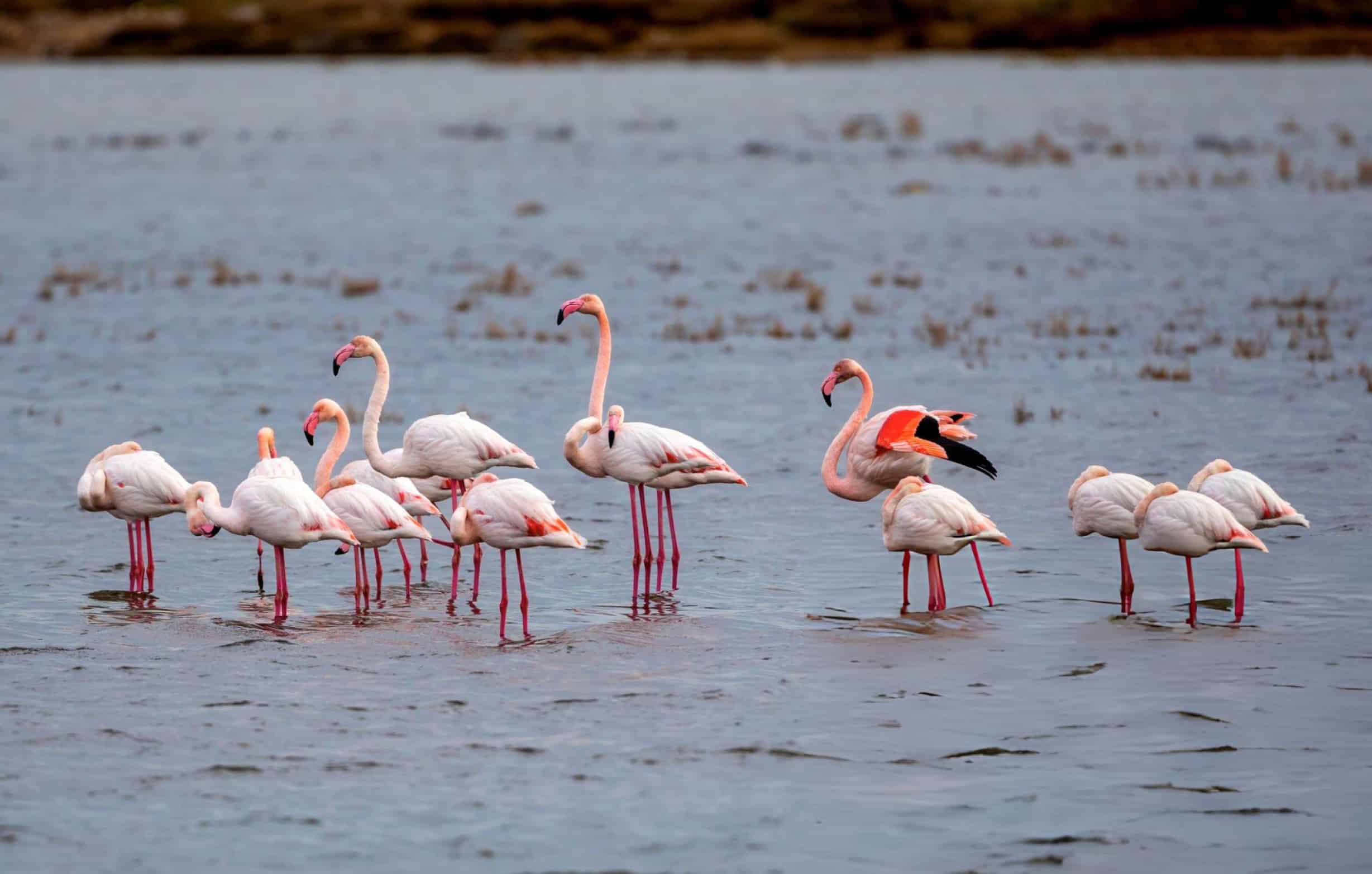
Large wintering flocks color the coastal lagoons near Essaouira and the Souss estuary pink.
A World Migration Bottleneck
Migration in the Strait of Gibraltar
Twice a year, one of the planet’s great bird migrations funnels past Morocco’s northern coast. Because the crossing point is so narrow, here’s what that actually looks like on the ground.
Thousands of Raptors, One Narrow Crossing
Rather than cross open water, migrating raptors and storks funnel through the narrowest point between Africa and Europe, making the Strait one of the densest raptor-watching sites on Earth.
Spring and Autumn Peaks
Northbound migration peaks in spring, while the return south peaks in autumn. Both seasons bring honey buzzards, black kites, and white storks in large numbers.
Toyota Land Cruiser 4x4 Access
Coastal viewpoints and inland raptor-watch points are reached by private 4x4, so the group can chase a good thermal or a moving kettle of storks without losing time.
Guides Who Read the Sky
Knowing where thermals form and when the wind favors a crossing is local knowledge, built from watching this same stretch of coast season after season.
Plan By Season
Month-by-month birding in Morocco
Morocco is a year-round destination, but different months favor different species.
Signature Birding Itinerary
Start with our 14-day route, then make it yours

14-Day Morocco Birding Tour
From coastal wetlands to the High Atlas and Sahara oases. This route tracks a wide range of species across Morocco’s most productive habitats. Bird photography in Morocco fits naturally into the slower stops along the way.
Bird Photography In Morocco
A few frames from the field


Frequently Asked Questions
Planning your Morocco birding tour
Let’s Plan Your Route
Tell Ismail and Mustapha which species you’re chasing
Every itinerary here is a starting point. Share your target species and dates, and their team will build a private route around them.