
by Morocco Meander
Share
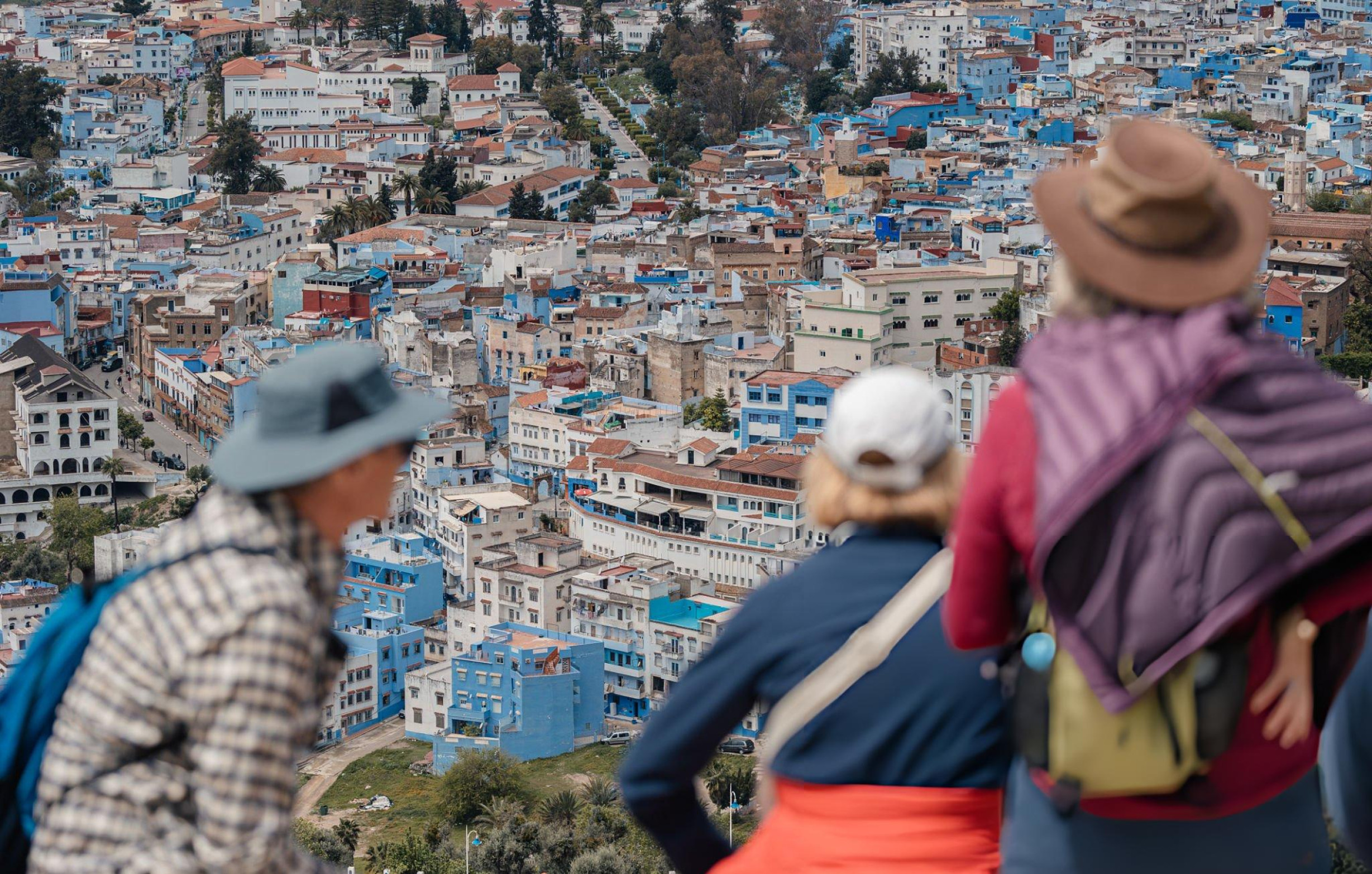
Morocco can be an excellent destination for older travelers, but not automatically, and not on any itinerary. The same country that rewards a well-paced trip with warm hospitality, gentle courtyards, and unhurried mint-tea afternoons can also wear a traveler down fast with steep medina stairs, six-hour drives, and one-night stops. Whether Morocco is good for seniors comes down almost entirely to how the trip is planned, not whether Morocco itself is suitable. This guide covers safety, health, walking demands, and realistic pacing, so you can judge for yourself rather than take a marketing line's word for it.
Yes, Morocco can be an excellent destination for mature travelers, particularly with a private, well-paced itinerary rather than a fixed group-bus schedule. Short flights from Europe, a culture that generally treats older guests with real courtesy, mild shoulder-season weather, and strong value for money all work in its favor.
What matters more than the destination itself is the details: private transport with rest stops, ground-floor or elevator rooms, an ensuite desert camp instead of a shared one, and two to three nights per base city instead of one.
Why Morocco Can Work Well for Older Travelers
For older travelers, three things usually matter most: comfort, pace, and a sense of being looked after. Morocco has real strengths in all three, especially when the trip is planned with those priorities in mind rather than adapted from a younger, faster-paced route.
Moroccan culture places real weight on respect for elders. It's common to see a shopkeeper offer a chair to rest in, or riad staff insist on carrying luggage up a staircase. That kind of everyday courtesy goes a long way on a trip where comfort matters more than covering ground quickly.
Weather is another practical advantage. Spring (March to May) and autumn (September to November) bring mild, generally dry days across most tourist regions, the easiest conditions for longer sightseeing days and desert nights. Summer heat in the Sahara can exceed 40°C, worth avoiding regardless of age; winter is pleasant in the south but brings cold desert nights and occasional snow on the higher mountain passes.
Value is a factor too. A private driver, a comfortable riad, and a full day of guided touring in Morocco typically cost less than the equivalent experience in Western Europe, which can make a higher level of comfort and personal service more affordable on a fixed retirement budget.
Is Morocco Safe for Senior Travelers?
Yes, and the official record backs that up. Advisory levels are reviewed periodically and can change, so always check the current rating on the US State Department's Morocco travel advisory before booking and again before departure.
Morocco's current advisory level is officially described as Exercise Increased Caution
, the same tier applied to much of Western Europe.
In practice, this means ordinary situational awareness in crowded tourist areas, not a reason to avoid a trip. The most common issue for tourists is petty theft, such as pickpocketing in busy souks, rather than anything more serious. For UK travelers, the FCDO's Morocco travel advice covers the same ground with country-specific detail.
A few habits reduce risk further: use a licensed guide in the medinas rather than an unofficial one, keep valuables in a hotel safe, use a private driver instead of unfamiliar public transport, and register your trip with your embassy's traveler program before you leave. For extra peace of mind, a private driver-guide for the whole trip, rather than switching guides city to city, makes a noticeable difference to how safe and cared-for the trip feels.
Health and Vaccines for Senior Travelers
Morocco has no malaria risk, which removes one common travel-health concern. Beyond that, specific vaccine and medication recommendations change over time, so check current guidance from the CDC's travel health page for Morocco and the CDC's dedicated advice for older travelers before departure.
The CDC advises that all travelers, including seniors, should see a doctor at least one month before they travel
to discuss medical conditions and medications.
A few general steps are worth planning around:
- Book that pre-trip doctor's visit, and bring a full list of your current medications and conditions.
- Pack prescription medication in carry-on luggage with a printed copy of prescriptions and the generic drug names.
- Buy travel insurance that covers medical care and emergency evacuation abroad; standard Medicare and many home health plans do not pay for care outside the country.
- Stick to bottled or filtered water and be cautious with ice outside larger hotels, since traveler's diarrhea is a common complaint and can hit seniors harder.
- Build a rest day into the itinerary after any overnight flight, especially before a Sahara segment, where nighttime desert temperatures drop quickly.
Travelers managing chronic conditions such as diabetes, arthritis, or reduced mobility should pack accordingly, with extra attention to medication storage, sun protection, and footwear suited to uneven medina streets.
Realistic Senior-Friendly Itineraries
The single biggest factor in a comfortable senior trip is pace, not age. A seven-day itinerary trying to cover eight or nine destinations can be exhausting at any age. Travelers who prefer a gentler pace generally get more from Morocco by reducing hotel changes and spending two or three nights in key places instead of one.
Because the Sahara adds significant driving time, it's worth treating it as a separate decision rather than assuming it belongs in every itinerary. Two realistic starting points:
Comfort-focused route (no Sahara)
Casablanca → Rabat → Fes → Marrakech → Essaouira. This keeps driving segments shorter and avoids the long stretches to and from the desert, while still covering imperial-city history, medina culture, and coastal relaxation.
Classic route (with Sahara)
Casablanca → Rabat → Fes → Merzouga (Sahara) → Dades Valley / Ouarzazate → Marrakech. This is the fuller, more traditional Morocco route, and it works well for seniors when the desert camp is ensuite rather than shared, and the drive is broken into shorter daily segments rather than long consecutive hauls.
If minimizing driving is the priority, don't automatically include the Sahara — Morocco is still a complete and rewarding trip without it. One accommodation rule matters more than most: choose riads carefully. Traditional riads are beautiful, but many have steep, narrow staircases and no elevator, since they predate modern accessibility design. Confirm elevator access or a ground-floor room before booking.
Choosing Your Trip Length
Longer isn't automatically better for senior travelers — it depends on how the days are paced.
| Duration | Best For | What to Expect |
|---|---|---|
| 7 days | A gentler first introduction | Marrakech plus one region, without cramming in imperial cities too. |
| 10–12 days | Most senior travelers | Marrakech, the Atlas, one night at an ensuite desert camp, and one or two imperial cities at an unhurried pace. |
| 14 days | A full first trip to Morocco | Adds the coast or the north (Chefchaouen, Rabat) without back-to-back one-night stops. |
| 17–21 days | Return visitors or those with time to spare | Covers nearly everything, but works best with rest days built in every 4–5 days rather than constant movement. |
Based on Morocco Meander's private senior itineraries; exact pacing varies by route and traveler preference. See our full Morocco itineraries for seniors comparison for a deeper look at each option.
How Much Walking Should Seniors Expect?
Walking demands vary a lot by destination, so it helps to know what's ahead before you book:
- Marrakech. Vehicles can't reach every medina street, so some walking on uneven, narrow lanes is unavoidable near riads and souks.
- Fes. One of the largest pedestrian-only medinas in the world, with uneven surfaces and gentle but frequent inclines.
- Chefchaouen. Built on a hillside, with steps and sloped streets throughout the blue medina.
- Essaouira. A more compact medina than Marrakech or Fes, though surfaces are still uneven in places.
- Sahara. Soft sand and uneven terrain around desert camps; a short camel ride or 4WD transfer reaches most camps, and multi-day treks are entirely optional, not mandatory.
- Volubilis. An open-air Roman archaeological site with exposed, sometimes uneven walking paths and little shade.
Guides can shorten routes and build in more rest stops on request. Sharing your preferred walking level before hotels and guides are booked, not after you arrive, does more to shape a comfortable trip than almost anything else in the planning process.
Morocco Tours for Retired Couples
Retired couples often want something specific: fewer wake-up calls, more flexibility, and experiences that feel personal rather than scheduled. Our Morocco tour for retired couples is built for two, with a shared car and driver for the whole trip, no waiting on a group, no fixed departure times, and the freedom to skip a stop that doesn't interest you.
Popular additions for couples include a private cooking class in a family riad kitchen, a traditional hammam and spa afternoon, a private rooftop dinner overlooking the medina, and a gentle walk through Marrakech's Majorelle Garden or the Menara Gardens, both flat and shaded.
Getting There from the USA, Canada, UK, and Australia
Flight planning affects how a trip starts, and a smoother arrival makes the first two days far more enjoyable.
From the UK: direct flights from London and Manchester to Marrakech or Casablanca run around three and a half hours, short enough to arrive fresh and start sightseeing the next morning.
From the USA and Canada: Royal Air Maroc and partner carriers operate direct flights to Casablanca from New York and Montreal. Travelers from other cities typically connect through a European hub such as Paris, Madrid, or London. See our notes on planning Morocco tours for seniors from the USA for more on flight routing and timing.
From Australia: travelers generally connect through Dubai, Doha, Singapore, or a European city, meaning total travel time of 24 hours or more. Planning a full rest day on arrival before any guided touring begins is worth the extra night.
Most passport holders from the USA, Canada, the UK, and Australia can currently enter Morocco visa-free for stays of up to 90 days, provided the passport has at least six months of remaining validity. Always confirm current entry requirements with the US State Department's Morocco country page or your nearest Moroccan embassy before booking, since requirements can change.
Accessibility Notes for Limited Mobility
Morocco is more accessible than its reputation suggests, but conditions vary by destination and depend a lot on your own mobility level. Agadir and parts of Rabat generally offer wider, more modern streets than the historic medinas of Fes and Marrakech. Essaouira's medina is comparatively compact, but surfaces can still be uneven in places.
- Request a riad with an elevator, or a ground-floor room if the property has stairs only.
- Use a private guide inside the medina rather than navigating independently; a good guide will generally choose smoother, less crowded routes.
- Favor a private van or 4x4 over shared transport, which allows the vehicle to stop closer to entrances.
- Consider packing a lightweight folding cane or walking stick even if it isn't usually needed at home; cobblestones are uneven in most old towns.
- Build extra time into museum and palace visits rather than rushing between stops.
Every traveler's mobility needs are different. Describe specifically what kind of surfaces, distances, or stairs are difficult for you when booking, rather than relying on general descriptions like this one.
Morocco Tours for Seniors Worth Exploring
These are real, bookable routes built with a relaxed pace in mind rather than a packed schedule.
-
Hub Page
Morocco Tours for Seniors
Our full range of senior-paced private tours, from a first short trip to a full three-week journey.
-
7 Days
Morocco Tour for Seniors, 7 Days
A shorter first trip, ideal if two full weeks feels like too much for a first visit.
-
10 Days
10-Day Morocco Tour For Seniors
A senior-paced route from Marrakech to Casablanca via the Sahara, Fes, Chefchaouen, and Rabat.
-
12 Days
Golden Age Morocco Tour, 12 Days
Thoughtfully paced from the start, blending cultural stops with Morocco's most striking landscapes.
-
Desert Extension
Erg Chigaga Tours for Seniors
A quieter, less-visited dune field than Merzouga, for travelers who want the deep desert without the crowds.
-
For Two
Morocco Tour for Retired Couples
A private route built specifically around flexibility and unhurried pacing for two.
Every one of these can be shortened, extended, or rearranged. Compare durations and routes in more depth on our best Morocco itineraries for seniors guide.
Frequently Asked Questions
Is Morocco safe for senior travelers?
Generally yes, with normal precautions. The US State Department's advisory currently sits at the same level applied to much of Western Europe. A private driver and licensed guides reduce the most common risk, petty theft, to a minor concern.
What is a realistic Morocco itinerary for seniors or retired couples?
A private route of 10 to 12 days with two to three nights per base city, fewer hotel changes, and a rest day after the international flight tends to work well for most retired couples. See our senior itinerary comparison for route options by length.
Do seniors need special vaccines or health preparations for Morocco?
Check current guidance from the CDC, since recommendations are updated over time. There is no malaria risk in Morocco. The CDC recommends seeing a doctor at least a month before departure to review vaccines, medications, and travel insurance.
How much walking should seniors expect in Morocco?
It depends on the destination. Marrakech and Fes have pedestrian-only medina streets with uneven surfaces; Essaouira's medina is more compact; open-air sites like Volubilis involve exposed walking. Share your preferred walking level with your operator before booking.
Do seniors have to ride a camel to reach a Sahara camp?
No. A short camel ride or a 4WD transfer reaches most desert camps; multi-day treks some tours offer are entirely optional extras, not part of a standard itinerary.
Are private Morocco tours for seniors worth the extra cost?
For many older travelers, yes. A private tour removes the fixed pace of a group bus and gives direct access to a driver for rest stops or an early return to the hotel when needed.
Can seniors from the USA, Canada, UK, and Australia fly to Morocco easily?
UK travelers have direct flights of around three and a half hours. US and Canadian travelers can fly direct to Casablanca from New York or Montreal, or connect through Europe. Australian travelers generally connect through Dubai, Doha, or Europe, so a rest day on arrival is worth planning for.
- US Department of State, Morocco Travel Advisory — travel.state.gov
- CDC, "Older Adults and Healthy Travel" — wwwnc.cdc.gov
- CDC, Travelers' Health — Morocco — wwwnc.cdc.gov
- UK Government, Morocco Travel Advice — gov.uk
Plan Your Trip
- Morocco Tours for Seniors
- Best Morocco Itineraries for Seniors
- 10-Day Morocco Tour For Seniors
- Golden Age Morocco Tour, 12 Days
- Morocco Tour for Retired Couples
- Build a Tailor-Made Morocco Tour
Get a Senior-Friendly Itinerary, Built Around You
Tell Ismail and Mustapha your dates, pace, and any mobility or dietary needs. They'll reply personally with a route built around comfort, not a fixed template.